Essays
Field Notes: Listening to Artists
Arnika Ahldag
When the team at MAP sits down to plan projects that will shape years of work across departments, we ask what our audiences want to engage with, what conversations we have a stake in — and, crucially, what artists have to say. Ultimately, exhibitions are a little like conversations that take into account a multitude of voices and opinions, and you can choose to listen or to contribute. We, of course, would love to see you contribute.
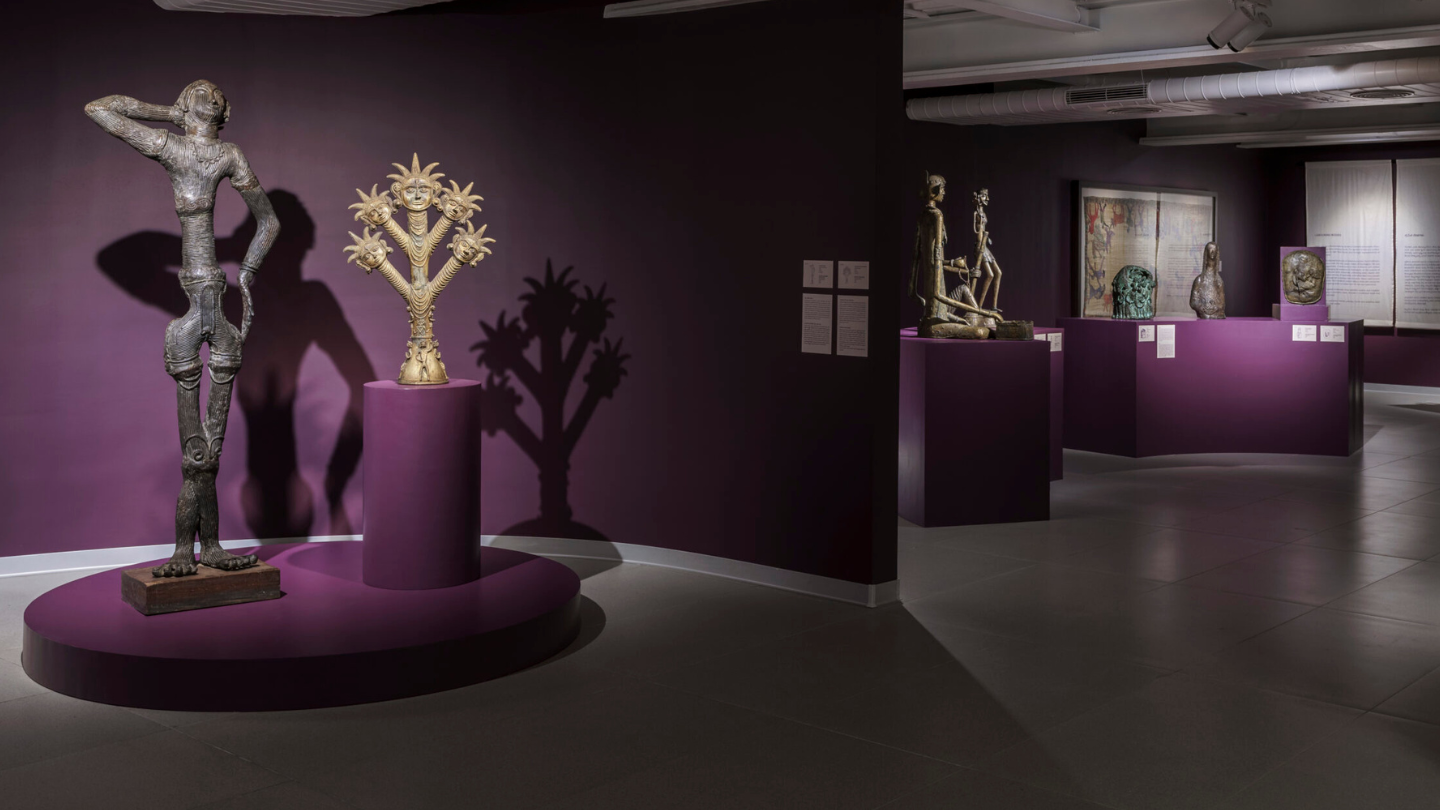
As a museum, we hold a historical collection, and many of the propositions found in the exhibition Beneath the Turning Sky belong to the past. But that raises an interesting question: what can the past teach us about the future?
Beneath the Turning Sky attempts to be that kind of conversation, one that includes the histories and imaginings artists chose to give visual form to — to preserve and pass them on. For millennia, humans made sense of the world through myth, observation, and story.
Because this exhibition draws from the MAP Collection, we wanted to widen that conversation further. This year, we’re extending it into a new annual gathering — and the question we’re starting with might surprise you.
Beneath the Turning Sky is organised around a journey: Wonder, Exploration & Conquest, and Future, Present, and that journey gives us a natural spine for three conferences, Field Notes for each year of the exhibition. Together, they bring artists and cultural workers into conversation with practitioners from other fields such as law, policy, advocacy, ecology, technology, and social work, as well as with members of local communities, to reimagine our relationship with the environment through creative, critical, and collaborative practice.
The first edition Field Notes: Towards Ecological Knowing takes place on 21–22 August 2026, and picks up the exhibition’s opening gesture: the creation myths and cosmologies through which humans first tried to read the world they lived in. We want to think with you about the following question: before we can act on the world, we must learn to read it again. And from whose maps, and whose histories?
Over two days, Field Notes will turn to indigenous, folk, and traditional ecological knowledge systems across South Asia, Adivasi land relationships, seasonal cosmologies, river cultures, and the kinships between human and non-human worlds. It will ask how artists listen to landscapes, what they record that scientists often cannot, and how the very materials artists work with carry their own ecological histories. It will look at place-making as a form of resistance, community-led cartography, the politics of naming and claiming land, and the unruly ecologies of Indian cities. This is an invitation to come and ask together: what does it mean to read the world again?
More details on Field Notes: Towards Ecological Knowing, including speakers, sessions, and registration, will follow in the coming weeks.
This initiative is made possible with the support of Rohini Nilekani Philanthropies.
FIRST PUBLISHED
June 18, 2026
 ACCESS LEVEL
Public
Author
Arnika Ahldag
Series
Field Notes
Read Category
Essay
Supported By
Rohini Nilekani Philanthropies
Read Time
2 minutes