Painted Photographs
ವರ್ಣಲೇಪಿತ ಛಾಯಾಚಿತ್ರಗಳು
In the 1800s, photographers took over the role previously held by painters, as portrait artists. However, when their monochromatic images failed to capture the vibrancy of life, painters made a comeback to the field, joining photo studios as colourists, to add colour to photographic prints. At the same time, photographers allowed artists to blur the boundaries between reality and fakery by adding fine details. The paint pigment layers either covered the photo’s surface in an impenetrable way or remained translucent, preserving the integrity of the material photographed. With this collaboration between the photographer and colourist, every component of a photograph—from clothing, upholstery, skin and hair, to decorations and vases—found an identity.
1800 ರ ದಶಕದ ಹೊತ್ತಿಗೆ ಅಲ್ಲಿಯವರೆಗೂ ವರ್ಣಚಿತ್ರಕಾರರು ವಹಿಸಿದ್ದ ಭಾವಚಿತ್ರ ಕಲಾವಿದರ ಪಾತ್ರವನ್ನು ಛಾಯಾಗ್ರಾಹಕರು ವಹಿಸಿಕೊಂಡರು. ಅವರ ಏಕವರ್ಣದ ಚಿತ್ರಗಳು ಜೀವನದ ವೈವಿಧ್ಯತೆಯನ್ನು ಸೆರೆಹಿಡಿಯಲು ವಿಫಲವಾದಾಗ, ವರ್ಣಚಿತ್ರಕಾರರು ಮತ್ತೆ ಅದೇ ಸ್ಥಾನಕ್ಕೆ ಮರಳಿ ಛಾಯಾಗ್ರಹಣದ ಮುದ್ರಣಗಳಿಗೆ ಬಣ್ಣವನ್ನು ಸೇರಿಸಲು ಫೋಟೊ ಸ್ಟುಡಿಯೊಗಳಿಗೆ ವರ್ಣ ಕಲಾವಿದರಾಗಿ ಸೇರಿಕೊಂಡರು. ಅದೇ ಸಮಯದಲ್ಲಿ ಕೆಲವು ಅಂಶಗಳನ್ನು ಸೇರಿಸುವ ಮೂಲಕ ಛಾಯಾಗ್ರಾಹಕರು ನೈಜತೆ ಮತ್ತು ಭ್ರಮೆಯ ನಡುವಿನ ಗಡಿಗಳನ್ನು ಮಸುಕುಗೊಳಿಸಲು ಕಲಾವಿದರಿಗೆ ಅವಕಾಶ ಮಾಡಿಕೊಟ್ಟರು. ಪೇಂಟ್ ಪಿಗ್ಮೆಂಟ್ ಪದರಗಳು ಫೋಟೋದ ಮೇಲ್ಮೈಯನ್ನು ಬೇಧಿಸಲಾಗದ ರೀತಿಯಲ್ಲಿ ಆವರಿಸಿಕೊಂಡು ಅಥವಾ ಅರೆಪಾರದರ್ಶಕವಾಗಿ ಉಳಿದು, ಛಾಯಾಚಿತ್ರದಲ್ಲಿ ಇದ್ದ ವಸ್ತುವಿನ ಸಮಗ್ರತೆಯನ್ನು ಕಾಪಾಡಿದವು. ಛಾಯಾಗ್ರಾಹಕ ಮತ್ತು ಕಲಾವಿದರ ಈ ಸಹಯೋಗದಲ್ಲಿ, ಛಾಯಾಚಿತ್ರದ ಪ್ರತಿಯೊಂದು ಅಂಶವೂ ಅಂದರೆ ಬಟ್ಟೆ, ಸುತ್ತಲಿನ ಸಾಮಗ್ರಿಗಳು, ಚರ್ಮ ಮತ್ತು ಕೂದಲು, ಅಲಂಕಾರಗಳು ಮತ್ತು ಹೂದಾನಿಗಳವರೆಗೆ ಒಂದು ಅಸ್ಮಿತೆಯನ್ನು ಕಂಡುಕೊಂಡವು.
Click on an object to learn more
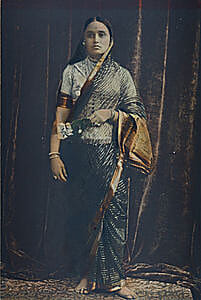

Click to open
PHY.02382
PORTRAIT OF MAHARANI CHIMNABAI II
c.1895
India
Hand-tinted photographic print
H. 19 cm, W. 12.5 cm; Support: H. 32 cm, W. 26 cm

Click to open
PHY.01676
PORTRAIT POSSIBLY OF MAHARAJA BHUPAL SINGH
Late 19th century
India
Hand-painted photograph
H. 25.5 cm, W. 19 cm; Support: H. 45 cm, W. 31.4 cm

Click to open
PHY.03970
HIS HIGHNESS, THE MAHARAJA OF GWALIOR
1915
India
Hand-painted silver gelatin
Image: H. 24.5 cm, W. 17 cm; Mount: H. 27.5 cm, W. 19.5 cm