Trade Textile Fragments
ಬಟ್ಟೆ ಮುದ್ರಣ ಅಚ್ಚುಗಳು
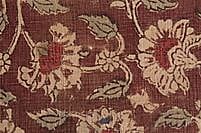
Cotton textiles that were resist-dyed, painted and block printed were commissioned and traded across the Indian Ocean, a hub of maritime commerce since at least the beginning of the millennium. Known for their colour fastness and designs, these textiles attracted buyers from regions in present day Indonesia, Malaysia, Thailand, Cambodia and Sri Lanka.
Calico textiles were woven from rough, unbleached cotton and block printed with a variety of designs. Chintz textiles were similarly produced from glazed cotton fabric and were printed with geometric and floral designs. Both calico and chintz were traded extensively with North America and Europe. Printed or painted cotton textiles were also made for the Japanese market and came to be known as ‘sarasa’. The fragments here were made for various Southeast Asian markets.
ಸಹಸ್ರಮಾನದ ಆರಂಭದಿಂದಲೂ ಪ್ರತಿರೋಧಕ-ಬಣ್ಣ, ಬಣ್ಣ ಮತ್ತು ಬ್ಲಾಕ್ ಪ್ರಿಂಟ್ ಮಾಡಲಾದ ಹತ್ತಿ ಜವಳಿಗಳನ್ನು ಕಡಲ ವಾಣಿಜ್ಯದ ಕೇಂದ್ರವಾಗಿದ್ದ ಹಿಂದೂ ಮಹಾಸಾಗರದಾದ್ಯಂತ ನಿಯೋಜಿಸಿ ವ್ಯಾಪಾರ ಮಾಡಲಾಯಿತು. ತಮ್ಮ ಬಣ್ಣದ ಗಟ್ಟಿತನ ಮತ್ತು ವಿನ್ಯಾಸಗಳಿಗೆ ಹೆಸರುವಾಸಿಯಾದ ಈ ಜವಳಿಗಳು ಇಂದಿನ ಇಂಡೋನೇಷ್ಯಾ, ಮಲೇಷ್ಯಾ, ಥೈಲ್ಯಾಂಡ್, ಕಾಂಬೋಡಿಯಾ ಮತ್ತು ಶ್ರೀಲಂಕಾ ಪ್ರದೇಶಗಳಿಂದ ಖರೀದಿದಾರರನ್ನು ಆಕರ್ಷಿಸಿದವು.
ಕ್ಯಾಲಿಕೊ ಜವಳಿಗಳನ್ನು ಒರಟಾದ, ಬಿಳುಪುಗೊಳಿಸದ ಹತ್ತಿಯಿಂದ ನೇಯಲಾಗುತ್ತಿತ್ತು ಮತ್ತು ವಿವಿಧ ವಿನ್ಯಾಸಗಳೊಂದಿಗೆ ಮುದ್ರಿತ ಬ್ಲಾಕ್. ಚಿಂಟ್ಜ್ ಜವಳಿಗಳನ್ನು ಅದೇ ರೀತಿ ಮೆರುಗುಗೊಳಿಸಲಾದ ಹತ್ತಿ ಬಟ್ಟೆಯಿಂದ ಉತ್ಪಾದಿಸಿ ಜ್ಯಾಮಿತೀಯ ಮತ್ತು ಹೂವಿನ ವಿನ್ಯಾಸಗಳೊಂದಿಗೆ ಮುದ್ರಿಸಲಾಯಿತು. ಕ್ಯಾಲಿಕೊ ಮತ್ತು ಚಿಂಟ್ಜ್ ಎರಡನ್ನೂ ಉತ್ತರ ಅಮೇರಿಕಾ ಮತ್ತು ಯುರೋಪ್ನೊಂದಿಗೆ ವ್ಯಾಪಕವಾಗಿ ವ್ಯಾಪಾರ ಮಾಡಲಾಗುತ್ತಿತ್ತು. ಜಪಾನಿನ ಮಾರುಕಟ್ಟೆಗೆ ಮುದ್ರಿತ ಅಥವಾ ಬಣ್ಣದ ಹತ್ತಿ ಜವಳಿಗಳನ್ನು ಸಹ ತಯಾರಿಸಲಾಯಿತು ಮತ್ತು ಅದನ್ನು 'ಸರಸ' ಎಂದು ಕರೆಯಲಾಯಿತು. ಇಲ್ಲಿನ ತುಣುಕುಗಳನ್ನು ವಿವಿಧ ಆಗ್ನೇಯ ಏಷ್ಯಾದ ಮಾರುಕಟ್ಟೆಗಳಿಗಾಗಿ ತಯಾರಿಸಲಾಗಿಗುತ್ತಿತ್ತು.
Click on an object to learn more


Click to open
TXT.02032
BLOCK PRINTED TEXTILE FRAGMENT
Late 19th century-early 20th century
Possibly Gujarat, India
Cotton, natural dyes
L 11.5 cm, W. 1.5 cm

Click to open
TXT.02031
KALAMKARI TEXTILE FRAGMENT
Late 19th century-early 20th century
Gujarat or Coromandel Coast, India
Cotton, natural dyes
L 10.4 cm, W. 6.9 cm

Click to open
TXT.02030
SARASA TEXTILE FRAGMENT
18th century
Gujarat, India; for Japanese market
Cotton, natural dyes
L. 18.6 cm, W. 11.5 cm

Click to open
TXT.02029
KALAMKARI TEXTILE FRAGMENT
19th century
Coromandel Coast, India; for Indonesian and European market
Cotton, natural dyes
L. 11.5 cm, W. 4.8 cm

Click to open
TXT.02028
KALAMKARI TEXTILE FRAGMENT
19th century
Coromandel Coast; India for the Sumatran (Indonesian) market
Cotton, natural dyes
L. 13 cm, W. 9.1 cm

Click to open
TXT.02027
BLOCK PRINTED TEXTILE FRAGMENT
18th century
Gujarat, India; for the Thai market
Cotton, natural dyes
L. 13.2 cm, W. 4 cm

Click to open
TXT.02026
KALAMKARI TEXTILE FRAGMENT
18th century
Coromandel Coast, India; for the Thai market
Cotton, natural dyes
L. 17.1 cm, W. 12.1 cm

Click to open
TXT.02025
BLOCK PRINTED TEXTILE FRAGMENT
18th century
Gujarat, India; for the Southeast Asian market
Cotton, natural dyes
L. 13.6 cm, W. 10.8 cm

Click to open
TXT.02015
KALAMKARI TEXTILE FRAGMENT
19th century
Coromandel Coast, India; for the Indonesian market
Cotton, natural dyes
L. 9.9 cm, W. 8.7 cm

Click to open
TXT.02014
SARASA TEXTILE FRAGMENT
19th century
Gujarat, India; for the Japanese market
Cotton, natural dyes
L. 15 cm, W. 15 cm

Click to open
TXT.02013
KALAMKARI TEXTILE FRAGMENT
19th century
Coromandel Coast, India; for Indonesian market
Cotton, natural dyes
L. 11.1 cm, W. 10.1 cm

Click to open
TXT.02012
KALAMKARI TEXTILE FRAGMENT
19th century
Coromandel Coast, India; for Indonesian market
Cotton, natural dyes
L. 8.6 cm, W. 4.8 cm

Click to open
TXT.02011
SARASA TEXTILE FRAGMENT
19th century
Gujarat, India; for the Japanese market
Cotton, natural dyes
L. 8.7 cm, W. 6.1 cm
Click to open
TXT.02010
SARASA TEXTILE FRAGMENT
19th century
Gujarat, India; for the Japanese market
Cotton, natural dyes
L. 15.6 cm, W. 10.4 cm

Click to open
TXT.02009
SARASA TEXTILE FRAGMENT
18th century
Coromandel Coast, India; for the Japanese market
Cotton, natural dyes
L. 9.1 cm, W. 8.6 cm

Click to open
TXT.02008
SARASA TEXTILE FRAGMENT
20th century
Coromandel Coast, India; for the Japanese market
Cotton, natural dyes
L. 20.5 cm, W. 6 cm

Click to open
TXT.02006
BLOCK PRINTED TEXTILE FRAGMENT
19th century
Gujarat, India; for the Sulawesi (Indonesian) market
Cotton, natural dyes
L. 37 cm, W. 27 cm