Parsi Gara Embroidery
ಪಾರ್ಸಿ ಗಾರಾ ಕಸೂತಿ
Garo or gara, a Gujarati term which translates to ‘width’, refers to unstitched lengths of embroidered silk, often worn as saris by Parsi women in Western India. Parsi garas were imported from China by the Parsi traders of Gujarat and Bombay (present day Mumbai) in the nineteenth century. Fantastical creatures, birds and animal motifs such as cranes in flight, phoenixes and blooms were drawn from a rich repertoire of traditional Chinese motifs. These, and other mythological elements in garas came to be known as Parsi Gara Embroidery in the twentieth century. This style of embroidery was also used to decorate other clothing such as children’s tunics (jhablas), shawls and purses.s.
ಗುಜರಾತಿಯಲ್ಲಿ ಗಾರೋ ಅಥವಾ ಗಾರಾ ಎಂಬ ಪದಕ್ಕೆ 'ಅಗಲ' ಎಂಬ ಅರ್ಥ ಇದೆ. ಇದು ಹೊಲಿಗೆಯಾಗದ ಕಸೂತಿ ರೇಷ್ಮೆಯ ಲಂಬವನ್ನು ಸೂಚಿಸುತ್ತದೆ. ಇದನ್ನು ಹೆಚ್ಚಾಗಿ ಪಶ್ಚಿಮ ಭಾರತದಲ್ಲಿ ಪಾರ್ಸಿ ಮಹಿಳೆಯರು ಸೀರೆಗಳಾಗಿ ಧರಿಸುತ್ತಾರೆ. ಹತ್ತೊಂಬತ್ತನೇ ಶತಮಾನದಲ್ಲಿ ಗುಜರಾತ್ ಮತ್ತು ಬಾಂಬೆಯ (ಇಂದಿನ ಮುಂಬೈ) ಪಾರ್ಸಿ ವ್ಯಾಪಾರಿಗಳು ಚೀನಾದಿಂದ ಪಾರ್ಸಿ ಗಾರಾಗಳನ್ನು ಆಮದು ಮಾಡಿಕೊಂಡರು. ಅತಿಮಾನುಷ ಜೀವಿಗಳು, ಪಕ್ಷಿಗಳು ಮತ್ತು ಪ್ರಾಣಿಗಳ ಜೊತೆಗೆ ಹಾರುತ್ತಿರುವ ಕೊಕ್ಕರೆಗಳು, ಫೀನಿಕ್ಸ್ ಪಕ್ಷಿ ಮತ್ತು ಹೂವುಗಳಿಗೆ ಸಾಂಪ್ರದಾಯಿಕ ಚೀನೀ ಮೋಟಿಫ್ಗಳು ಪ್ರೇರಣೆಯಾಗಿ ಅಲ್ಲಿನ ಶ್ರೀಮಂತ ಸಂಗ್ರಹದಿಂದ ರಚಿಸಲ್ಪಟ್ಟವು. ಇವುಗಳು ಮತ್ತು ಇತರೆ ಗಾರಾಗಳಲ್ಲಿರುವ ಇತರ ಪೌರಾಣಿಕ ಅಂಶಗಳನ್ನು ಪಾರ್ಸಿ ಗಾರಾ ಕಸೂತಿ ಎಂದು ಇಪ್ಪತ್ತನೇ ಶತಮಾನದಲ್ಲಿ ಗುರುತಿಸಲಾಯಿತು. ಈ ಶೈಲಿಯ ಕಸೂತಿಯನ್ನು ಮಕ್ಕಳ ಪುಟ್ಟ ಅಂಗಿಗಳು (ಜಬ್ಲಾ), ಶಾಲುಗಳು ಮತ್ತು ಪರ್ಸ್ಗಳಂತಹವನ್ನು ಅಲಂಕರಿಸಲೂ ಸಹ ಬಳಸಲಾಗುತ್ತಿತ್ತು.
Click on an object to learn more

Click to open
TXT.05129
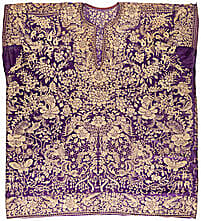
PARSI JHABLA
Late 19th–early 20th century
Gujarat, India
Silk, embroidery
L. 47 cm, W. 41 cm

Click to open
TXT.00024
TRADE CATALOGUE WITH SAMPLES OF PARSI GARA EMBROIDERED BORDERS (KOR)
c.1920
Germany, Europe
Silk, paper
Avg. long strip: H. 4.2 cm, W. 15.2 cm ; Avg. short strip: H. 4.3 cm, W. 8.2 cm ; Avg. folder: H. 29 cm, W. 38 cm